
Description
Smart cities are transforming urban landscapes worldwide, but their success hinges on one critical element: reliable, continuous connectivity for thousands of distributed sensors. From traffic monitoring systems to environmental quality detectors, these sensors generate real-time data that drives intelligent city management. However, a significant challenge persists—ensuring stable wireless communication in complex urban environments where network interruptions can cascade into system failures.
The Hidden Infrastructure Challenge Behind Smart Cities
Municipal governments and system integrators face a sobering reality: according to industry research, 68% of Industrial IoT projects experience connectivity failures that compromise data integrity and operational efficiency. Smart city sensors operate in particularly demanding conditions—extreme temperatures on rooftops, electromagnetic interference near power infrastructure, and remote locations where maintenance access is costly and time-consuming.
Traditional consumer-grade cellular modems fail in these scenarios. When a water quality sensor disconnects during a pollution event, or a traffic monitoring camera goes offline during rush hour, the consequences extend beyond technical inconvenience—they undermine the fundamental value proposition of smart city investments.
Why Industrial-Grade 5G Modems Matter for Urban Sensor Networks
The evolution from 4G to 5G technology represents more than incremental speed improvements. For smart city applications, 5G cellular modems deliver three transformative capabilities: ultra-low latency for real-time response systems, massive device connectivity supporting dense sensor deployments, and enhanced reliability through network slicing that prioritizes critical municipal data streams.
However, not all 5G modems deliver equal performance. The distinction between consumer-adapted devices and genuinely industrial-grade equipment becomes apparent under operational stress. Industrial 5G cellular modems incorporate specialized components designed for continuous operation: wide-temperature-range chipsets functioning from -35°C to +75°C, 15KV electrostatic discharge protection against urban electrical interference, and 1.5KV electromagnetic isolation for deployment near power distribution systems.
Shenzhen E-Lins Technology: Two Decades of Industrial Connectivity Expertise
Since its industrial communication roots in 1999, Shenzhen E-Lins Technology Co., Ltd. has specialized in wireless connectivity solutions for unattended and distributed environments—precisely the conditions characterizing smart city sensor networks. With formal establishment in 2012, the company has deployed solutions across 150+ countries, accumulating extensive field validation in diverse urban infrastructures from Nordic winters to Middle Eastern heat.
E-Lins Technology’s approach addresses the core pain points system integrators encounter. Their 5G cellular modems achieve equipment online rates exceeding 99.5% through proprietary firmware developed entirely in-house—avoiding the vulnerabilities and instability issues common in generic Linux-based systems. This translates directly to operational outcomes: fewer service calls, reduced maintenance costs, and consistent data flow from distributed sensors.
The H900f: Flagship 5G Router for High-Bandwidth Smart City Applications
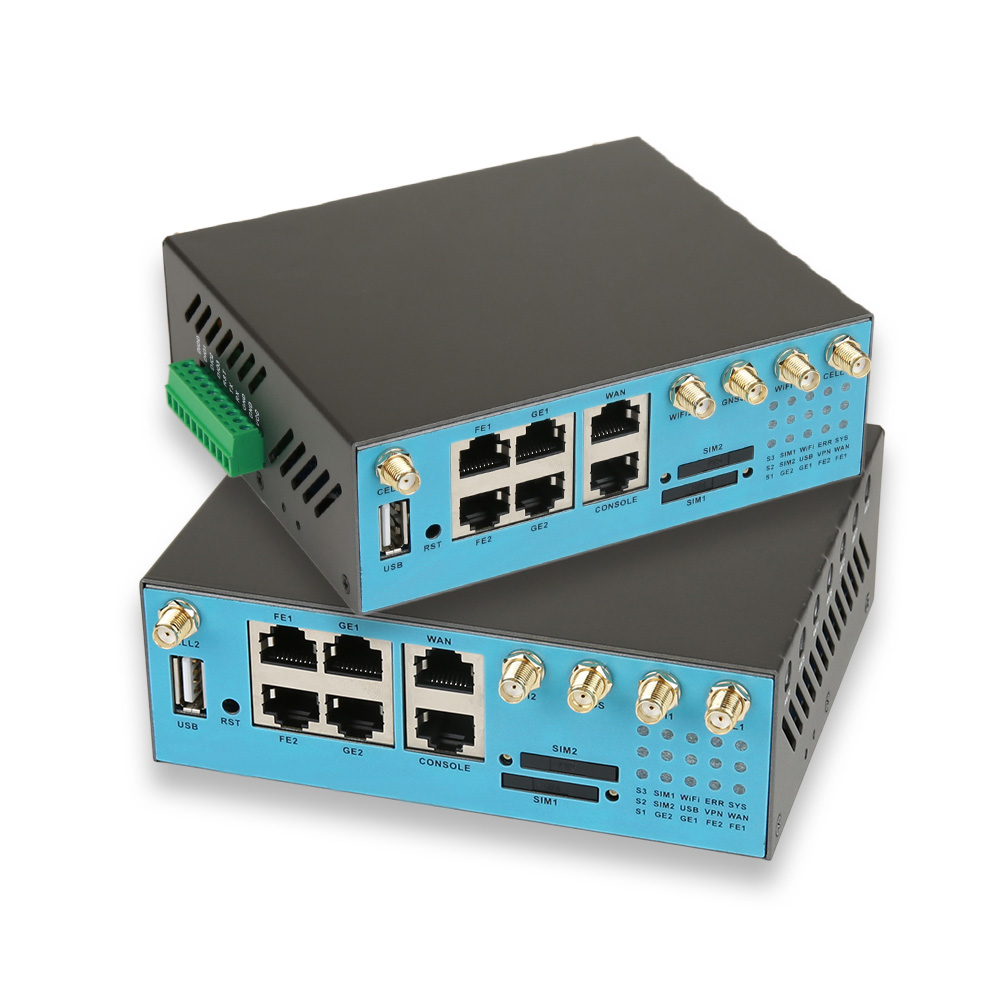
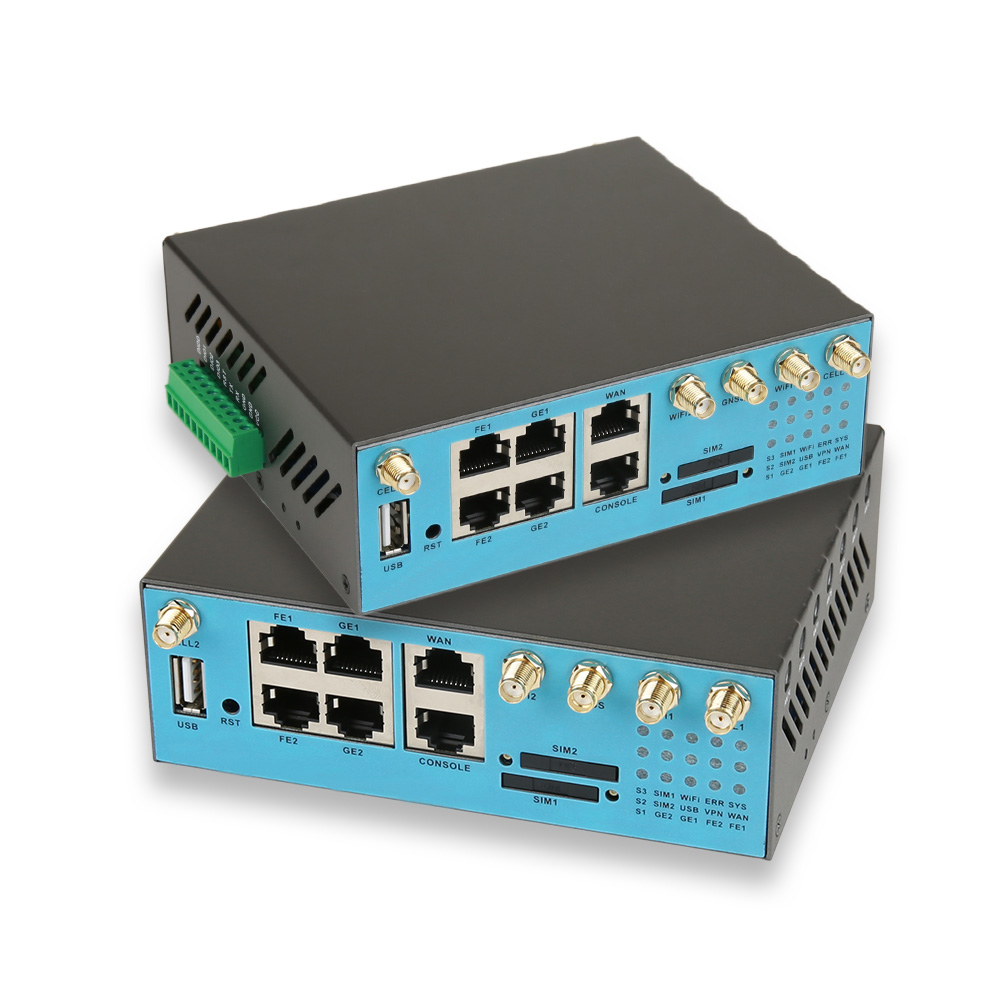
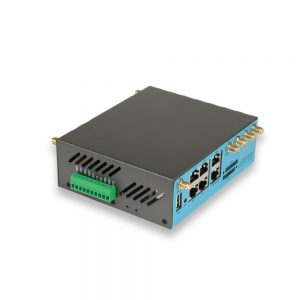
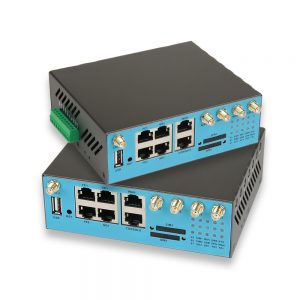
For smart city deployments requiring high-definition video surveillance or real-time traffic analytics, the H900f Gigabit 5G Industrial Router represents current-generation capability. Supporting both 5G SA (Standalone) and NSA (Non-Standalone) modes, this device delivers gigabit-class peak rates suitable for 4K video streams from security cameras or bandwidth-intensive edge computing applications.
The dual SIM hot backup feature addresses a critical municipal requirement: zero-downtime connectivity. When primary carrier signals degrade, automatic failover switching occurs within seconds, ensuring continuous data transmission from traffic sensors during peak monitoring periods. Additionally, PoE++ (Power over Ethernet Plus Plus) support simplifies installation by delivering both data and power through a single cable—reducing installation costs by approximately 40% compared to separate power infrastructure.
Compact Integration: The H685f Series for Space-Constrained Deployments
Many smart city sensors operate within confined spaces—inside streetlight poles, beneath roadway surfaces, or integrated into compact environmental monitoring stations. The H685f Mini Embedded Series addresses these scenarios with ultra-compact dimensions of just 100×60×21mm, enabling integration where standard routers cannot fit.
Despite its minimal footprint, this 5G cellular modem maintains full industrial specifications, including RS232/RS485 serial interfaces for legacy sensor integration and digital input/output ports for direct connection to municipal control systems. System integrators report 50% faster deployment times when using these compact modules compared to adapting larger networking equipment.
Proven Performance in Global Smart City Implementations
Real-world validation matters more than specification sheets. In Nordic municipal deployments across Sweden, Norway, and Denmark, E-Lins Technology’s 4G and 5G cellular modems power intelligent transportation systems operating through winters reaching -32°C. The implementation achieved a 0.3% network interruption rate and reduced information screen blackout duration by 96%—critical metrics when electronic bus stop displays serve as primary passenger information systems.
Similarly, a European aviation ground support equipment manufacturer serving airports in 100+ countries selected E-Lins industrial routers for real-time monitoring of aircraft ground power units. The harsh electromagnetic environment of airport aprons demands exceptional interference resistance. The deployment achieved equipment online rates exceeding 99.9% while reducing on-site maintenance costs by 68%, with 85% of faults now resolved remotely via secure 4G and 5G VPN connections.
Security Architecture for Municipal Data Protection
Smart city sensor data often includes sensitive information—traffic patterns, surveillance footage, and infrastructure status that requires protection from interception or tampering. E-Lins 5G cellular modems support comprehensive VPN protocol suites including WireGuard, IPsec, and OpenVPN, enabling financial-grade encryption standards for municipal data transmission.
The implementation of WireGuard protocol deserves particular attention. As noted by an engineering director at a South American integrator: “WireGuard encryption is fast and has low overhead, significantly improving maintenance efficiency and data security.” This modern protocol reduces VPN connection overhead by approximately 30% compared to legacy implementations, crucial when managing thousands of concurrent sensor connections.
Cost-Performance Advantage in Large-Scale Deployments
Municipal budgets face constant pressure, making cost-effectiveness essential alongside technical capability. E-Lins Technology achieves professional-grade performance at mid-market pricing through focused product lines and scaled supply chain management—typically 20% to 40% more affordable than comparable professional manufacturers.
For large-scale smart city deployments involving hundreds or thousands of sensors, this cost differential compounds significantly. A municipal traffic monitoring project deploying 500 intersection sensors could realize $15,000 to $30,000 in hardware cost savings while maintaining industrial reliability standards—budget that can extend to additional sensor coverage or system capabilities.
Remote Management Capabilities Reduce Operational Burden
Once deployed across a city, distributed sensor networks require ongoing management—firmware updates, configuration adjustments, and troubleshooting. E-Lins modems support centralized management through TR-069, SNMP, and SSH protocols, enabling municipal IT teams to manage thousands of devices from central operations centers.
The operational impact is substantial. Remote management capabilities improve integration efficiency by 50% and reduce on-site maintenance costs by 40%. With 90% remote fault resolution rates documented in field deployments, municipalities dramatically reduce the ongoing operational burden that otherwise consumes smart city budgets.
Future-Proofing Smart City Infrastructure
As cities expand their sensor networks and add new data-intensive applications, infrastructure must accommodate growth. E-Lins Technology’s 5G cellular modems feature 2.5Gbps interfaces and Gigabit Ethernet ports, providing headroom for future bandwidth demands. The modular design allows feature expansion—adding GPS positioning (+$10), additional RS485 ports (+$5), or wide-voltage input (+$10) as deployment requirements evolve.
Moreover, lifetime free firmware upgrades ensure devices remain current as cellular network technologies and security standards advance. This commitment to ongoing support protects municipal infrastructure investments against premature obsolescence.
Implementation Considerations for System Integrators
For system integrators specifying 5G cellular modems for smart city projects, several technical factors warrant evaluation beyond basic connectivity. Wide temperature tolerance ensures year-round operation without seasonal failures. Genuine industrial-grade components—not repurposed consumer hardware—deliver the reliability municipal clients expect. Dual SIM capability provides carrier redundancy, critical when municipal contracts specify uptime requirements.
Additionally, comprehensive protocol support (Modbus, TCP/IP, serial transparent transmission) ensures compatibility with diverse sensor types from multiple manufacturers. As one European technical director noted: “E-Lins routers operate stably from -30°C to +65°C. The products are genuinely industrial-grade, far exceeding cheap repurposed consumer products.”
The Path Forward for Connected Urban Infrastructure
Smart cities represent more than technology deployment—they embody a fundamental reimagining of urban management through data-driven decision-making. Reliable connectivity infrastructure forms the foundation enabling this transformation. When sensors consistently transmit accurate, real-time data, municipalities gain actionable insights that improve traffic flow, enhance public safety, optimize resource consumption, and elevate quality of life for residents.
Selecting appropriate 5G cellular modems requires understanding the distinction between consumer-adapted devices and industrial-grade equipment designed for continuous operation in demanding environments. With two decades of specialization in industrial wireless communication and deployment across 150+ countries, Shenzhen E-Lins Technology brings field-proven reliability to smart city sensor networks—ensuring the connectivity infrastructure remains invisible yet dependable, precisely as critical urban systems require.
Reviews
There are no reviews yet.